
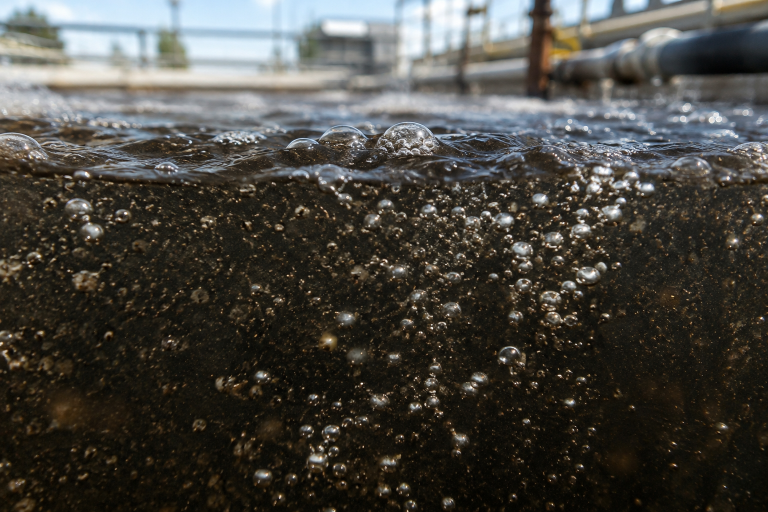
How Oxygen, Mixing, And Flow Shape Better Wastewater Treatment
Effective biological wastewater treatment depends on more than adding air to a basin. Oxygen availability, mixing intensity, and hydraulic flow must work together to ensure microorganisms remain in contact with wastewater and perform reliably. Well-selected wastewater aeration systems can support that goal, but equipment alone cannot correct an overlooked circulation problem, poor sensor data, or changing influent conditions.
The best operating approach is to treat aeration as part of the entire process. Facility teams should look at dissolved oxygen, solids movement, basin geometry, loading patterns, energy use, and effluent results together. This helps distinguish a true oxygen shortage from a mixing or flow-distribution issue.
Why Oxygen Matters In Wastewater Treatment
Dissolved oxygen is oxygen held in the water rather than simply present in the air above it. In aerobic treatment, microorganisms use that oxygen while consuming biodegradable material in wastewater. The activated sludge process relies on this biological activity, along with separation of treated water from biological solids later in the process.
Low dissolved oxygen can limit biological activity, particularly when loading rises or temperatures change. It may also contribute to odors, unstable treatment results, or settling concerns. At the other extreme, excessive aeration can consume unnecessary power without delivering a matching improvement in treatment. Oxygen demand changes with influent flow, organic strength, temperature, biological inventory, and time of day, so a fixed setting is not always appropriate.
The Role Of Mixing In Treatment Performance
Mixing keeps biological solids suspended and distributes wastewater, oxygen, and microorganisms throughout the basin. It is not enough to create visible turbulence at the surface. Effective mixing must reach the areas where solids could otherwise collect or where wastewater could pass through with limited contact time.
Poor circulation can create dead zones, uneven dissolved oxygen readings, surface mats, or solids deposits. For example, a basin may show acceptable oxygen near an aerator while lower areas receive less movement and less usable oxygen. In that situation, increasing air flow may not solve the main problem. The better correction may involve circulation, diffuser layout, equipment placement, or basin configuration.
How Flow Patterns Affect A Treatment Basin
Hydraulic flow describes the route wastewater takes through a treatment basin. Basin shape, water depth, inlet location, outlet arrangement, baffles, and equipment placement all influence that route. Short-circuiting occurs when part of the incoming flow reaches the outlet before it is intended, reducing the useful contact time with the biological solids.
Operators should also consider the full water column. Temperature differences, changing inflows, and seasonal conditions can alter circulation patterns. Sampling only one location can hide an underperforming zone. Comparing readings near the inlet, middle, outlet, surface, and lower depth, when safe and practical, provides a more complete picture.
Common Aeration Methods
No single aeration method is best for every facility. Selection should reflect basin geometry, treatment objectives, required mixing, maintenance access, and operating flexibility.
- Mechanical surface aeration: Creates turbulence at the water surface to encourage oxygen transfer and circulation. It is commonly used in open basins and lagoons.
- Diffused aeration: Uses blowers and submerged diffusers to release air bubbles into the mixed liquor. It can provide flexible air delivery but requires attention to fouling, airflow balance, and diffuser condition.
- Jet and venturi systems: Use pumped water and entrained air to support both oxygen transfer and circulation. Their effectiveness depends on sound hydraulic design.
- Hybrid systems: Combine air delivery and mechanical mixing where a site needs more control over both functions.
Dissolved Oxygen Control And Energy Use
Aeration is often a major controllable energy demand at wastewater facilities. The EPA notes that energy management and operational improvements can help utilities identify and prioritize efficiency opportunities, especially after establishing a baseline for energy use. Energy efficiency practices at water and wastewater utilities therefore start with understanding where and when power is being used.
Dissolved oxygen control can range from manual adjustments to automated systems using sensors, variable-speed drives, blowers, timers, and control logic. The objective is not to chase one universal setpoint. It is to supply enough oxygen for stable treatment while preserving the mixing needed to keep solids suspended.
Maintain The Data Before Trusting It
Sensor readings are only useful when instruments are cleaned, calibrated, and checked against process conditions. Teams should review trends, not just single readings. A daily spot check can miss high-demand periods, storm-related changes, weekend conditions, or overnight low-flow periods.
Signs Of Poor Aeration Or Mixing
- Persistent odors near tanks, ponds, or discharge points.
- Large dissolved oxygen differences across one basin.
- Solids accumulation in areas intended to remain mixed.
- Excessive foam, scum, or surface matting.
- Higher energy use without a corresponding improvement in treatment results.
- Performance changes following storms, production shifts, or seasonal temperature changes.
- Recurring fouling, clogging, air-distribution issues, or mechanical failures.
A Practical Process Review
- Build a baseline: Record flow, temperature, dissolved oxygen, loading, energy consumption, maintenance activity, and effluent data.
- Map the basin: Identify inlets, outlets, depths, baffles, aerators, diffusers, pumps, and potential dead zones.
- Measure more than one point: Compare conditions across the basin and at different depths where safe.
- Review peak and low-demand periods: Check storms, production peaks, weekends, and overnight operation.
- Separate the causes: Determine whether the issue is oxygen transfer, mixing, hydraulic flow, equipment condition, or a combination.
- Change one variable at a time: Make controlled adjustments, document results, and compare treatment performance with energy use.
What May Shape Wastewater Treatment In 2026
More facilities are likely to focus on real-time data, energy audits, variable operation, and process-wide performance reviews. Digital controls can help match air delivery to changing demand, while flow studies can reveal circulation issues before major construction is considered. These tools are most useful when paired with experienced operators, reliable maintenance, and site-specific process knowledge.
Conclusion
Better wastewater treatment comes from balancing oxygen, mixing, and flow rather than optimizing one factor in isolation. A basin can have ample air yet still underperform if circulation is uneven or water short-circuits through the process. Routine field observations, dependable monitoring, careful equipment maintenance, and gradual operating adjustments provide a practical path toward stable treatment and more efficient energy use.