
Simple Explanation of Types of Commercial Window Tinting
There are different types of window films used in commercial buildings such as offices, malls, hospitals, and shops to solve problems like excess heat, strong sunlight, glare on screens, and lack of privacy.
Following are the types of commercial window tinting to help you choose the right one.
Solar control film
Solar control film is one of the most common types used in commercial buildings. It is specially designed to reduce heat coming from the sun while still allowing natural light to enter the space. This type of film is helpful in hot weather to keep indoor temperatures comfortable.
Solar control films are popular in commercial areas because they help reduce air conditioning costs. They also make it easy for employees to work on computers and screens comfortably reducing glare.
Privacy window film
Privacy window films are helpful in places where privacy is priority and visibility needs to be limited. These are useful in offices, meeting rooms, clinics, banks, and ground-floor shops. These films make it difficult for people outside to see inside, while still letting light pass through.
Privacy films come in many styles like reflective or matte. In commercial window tinting, privacy film is often chosen for both function and appearance. It improves privacy and gives the building a professional, clean look.
Safety and security film
Safety and security films are usually thicker than regular window films. These films are mainly used to hold glass together if it breaks due to accidents, storms, or attempted break-ins. If a glass breaks suddenly, the film helps keep the pieces in place, which reduces chances of injury.
This type of film is widely used in schools, offices, and storefronts. In commercial window tinting, safety films are a great option for adding an extra layer of protection without changing the appearance of the glass.
Decorative window film
Decorative window films are used mainly for design, decorative and branding purposes. These films can include patterns, logos, lines, or textured effects. They are often used in restaurants, cafes, offices, reception areas, and shopfronts.
Businesses use decorative films to improve their interior look at a lower cost compared to replacing glass. These films help businesses create a modern and stylish look, while also providing light privacy.
Reflective and mirrored film
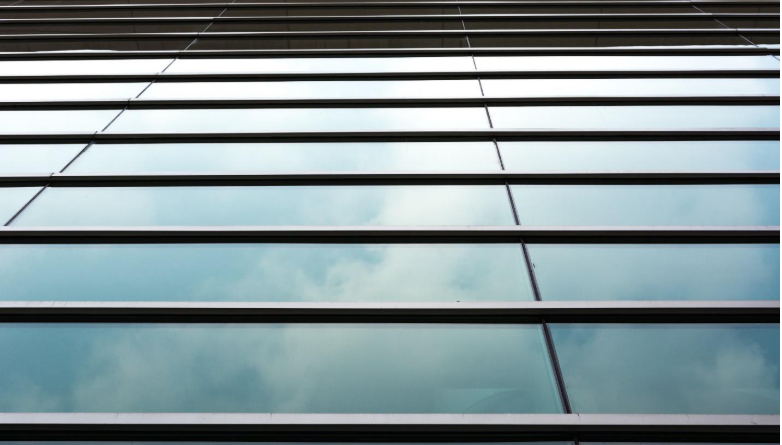
Reflective or mirrored films have a shiny surface that reflects sunlight. During the daytime, they act like a one-way mirror and provide strong privacy. These reflective films allow people inside to see out clearly, while people outside can only see a reflection.
These films are useful for office buildings or shopping malls with large glass windows exposed to strong sunlight. They also help reduce glare and heat, which improves indoor space.
Low-E and energy-saving film
Low emissivity films are designed to improve energy efficiency throughout the year. This type of film is useful in both hot and cold weather. They reduce heat entering the building in summer days and help keep warmth inside during winter time.
These films are perfect for businesses with high energy costs. They block harmful UV rays and improve comfort keeping a stable temperature. They are often used in modern commercial buildings where energy savings and comfort are a priority.